The Empty Chair
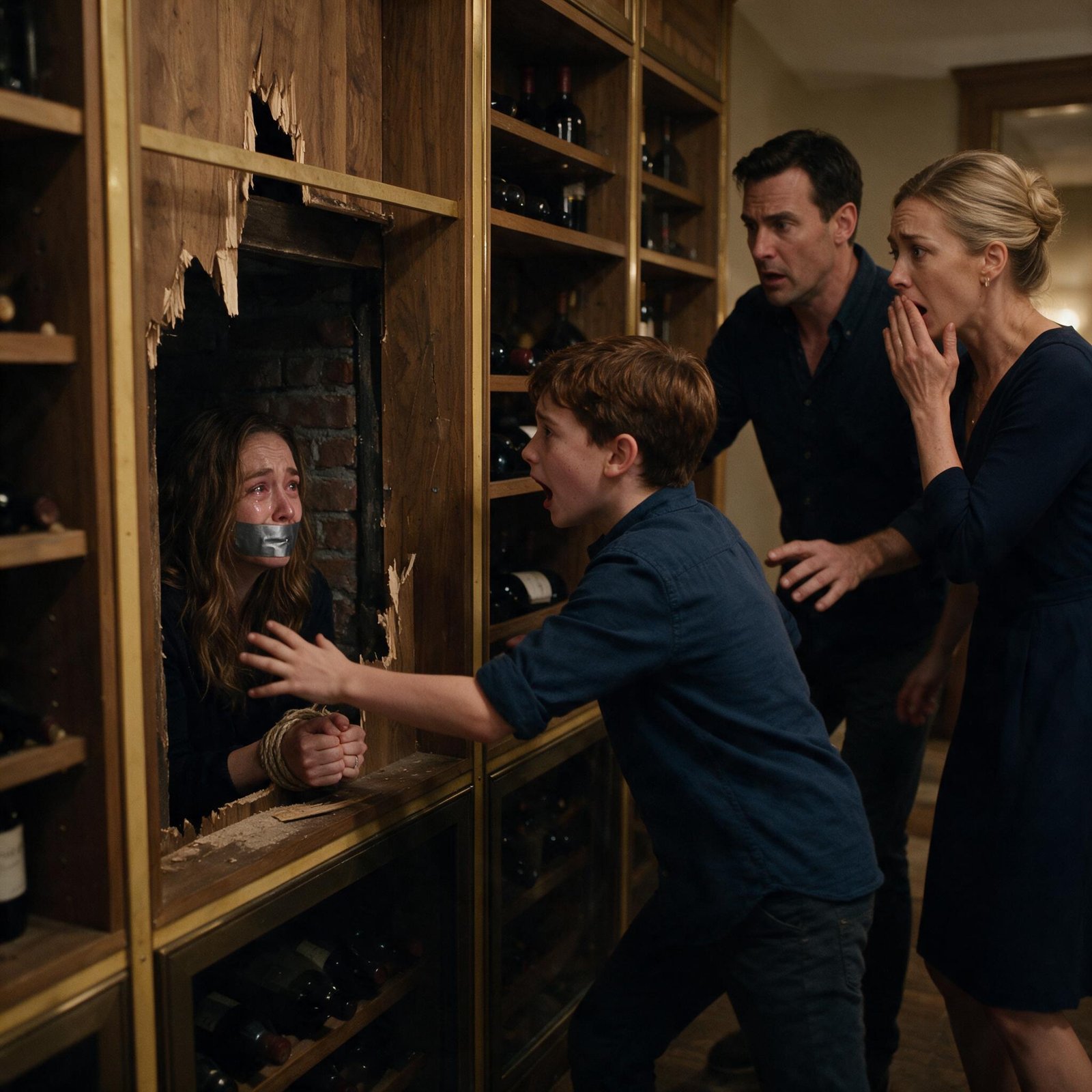
Five weeks after Ethan broke through the wine rack, Sarah returned to the mansion because this time entering it was her choice.
A survivor advocate sat beside her at the long dining table, an investigator waited near the open cellar, and Richard remained barred from the property under a protective order.
The broken bottles and jagged backing were gone, temporary lights lined the narrow passage, and every rough edge along the three-foot route had been covered before Sarah arrived.
She took her old chair beside the cellar doorway while Lisa's usual place across from her remained empty.
At the investigator's signal, Lisa entered through the concealed pantry hatch, followed the passage around its shallow bend, and stopped behind the old wooden louver facing the dining room.
Sarah rested both palms on the table and used the normal voice she had once trusted only to her sister.
“I left my marriage, not my son.”
For one breath, the mansion gave her nothing back.
Then Lisa's voice crossed the same timber and brick from the other direction.
“I heard every word.”
Sarah closed her eyes as the sentence reached the chair Lisa had left vacant.
Before the passage was made safe, the investigator had marked a shallow oval that interrupted the settled floor dust directly beneath the louver.
Two parallel scuffs at knee height had cut through older grime on the brick, consistent with someone kneeling there repeatedly rather than passing once.
At the pantry end, bright scratches showed beneath fresh oil on the latch's contact points, and the hatch's hinge pins were polished from repeated use even though Richard had always described that end of the service wing as sealed and useless.
The wear could not establish how many times he had entered, but it gave physical weight to the pattern Sarah and Lisa had reconstructed from memory.
Every private phrase Richard later echoed had first been spoken at this table while Lisa occupied the empty chair and Richard claimed to be upstairs, away, or too busy to listen.
He never repeated whole conversations, because whole conversations might have exposed the source.
He chose the sharp fragments instead, the words most likely to make Sarah believe her sister had carried them to him.
Then he watched Sarah withdraw from Lisa, cancel visits, and surrender one safe relationship at a time.
Richard had preserved the old service route when he built the wine rack across its cellar door, and the polished display had hidden a listening post long before he impulsively used the passage as Sarah's ninety-minute cell.
The knocks had crossed the route on the night Ethan heard them because ordinary voices had been crossing it for years.
Sarah finally understood why Richard had looked at the family before he looked toward the sound: discovery threatened more than the lie he had told about her leaving.
His order for everybody to go upstairs would have cleared both the cellar and the pantry approach, giving him the hidden route back.
Sarah had heard those exact words from behind the closed door, just as Richard had heard hers from the worn place beneath the louver.
The kidnapping case did not depend on what Lisa heard during the reconstruction.
Ten relatives had witnessed Richard restrain Ethan and block the rescue, while Sarah's abraded wrists, the rope, the tape, the exterior slide bolt, and her own account established what he had done to her.
The reconstruction answered a different question: how Richard had entered conversations he never attended and turned two sisters against each other without an accomplice.
When Lisa returned through the cellar door, she did not reach for Sarah or ask the advocate to leave.
“I told Ethan enough before I listened,” Lisa said.
“I did the same thing to you.”
Sarah looked at the chair across from her and let the apology remain there without pretending it repaired everything.
“I believe you didn't tell him,” she said, “but that isn't the same as trusting you again.”
Lisa nodded and accepted the boundary without bargaining.
Nine months after the dinner, Richard pleaded guilty to kidnapping and assault under a negotiated agreement, and the judge imposed a fourteen-year prison term with a no-contact order extending beyond his release.
The negotiated plea rested on the direct restraint and eyewitness evidence, while the passage reconstruction served only to corroborate the broader pattern of coercion.
After his first factual interview, Ethan returned to school and counseling while the adults carried the case without asking him to explain Richard or repair the family.
Sarah and Ethan never moved back into the mansion, choosing instead a modest apartment with an open kitchen, a visible front entry, and a dining space no wall could overlook.
Lisa began with short visits at Sarah's invitation, and the sisters rebuilt through kept appointments and ordinary truths rather than one dramatic promise of forgiveness.
By the first Sunday of spring, the three of them could finish lunch without every silence becoming a test.
One chair remained empty because Sarah had chosen to leave it that way, and from her place at the new table she could see every chair and every doorway.
Part 5 of 5 · The Boy Who Destroyed His Stepfather's Wine Cellar